
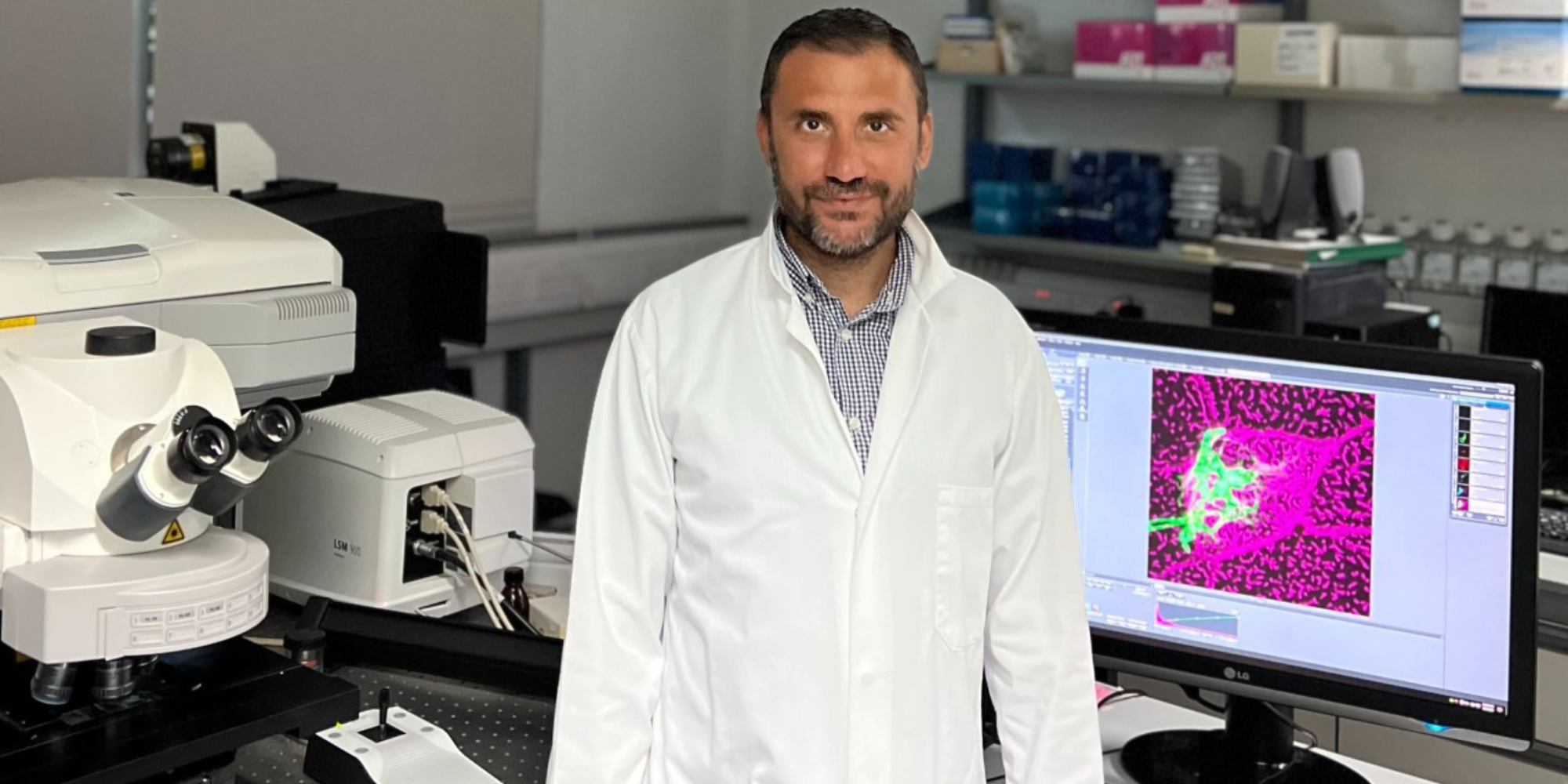
How Calcium Signals Guide the Integration of New Cells into Tissues
A publication in the prestigious journal Nature Communications reveals that calcium signals are essential for the integration of new cells into tissues, with implications for understanding structural birth defects and combating chronic diseases.
Researchers from the Laboratory of Cell and Developmental Biology at the Department of Biological Sciences, University of Cyprus, have published a significant study in Nature Communications, showing that brief, transient increases in calcium levels inside cells serve as critical “signals” for the incorporation of new cells into tissues. This fundamental biological process is essential for tissue development, regeneration, and repair throughout the body.
The study, led by Dr. Neophytos Christodoulou and Professor Dr. Paris Skourides, revealed that cells preparing to integrate into a tissue transiently activate short-lived calcium signals before appearing on the tissue surface. Without these signals, new cells fail to integrate properly, which can jeopardize tissue functionality.
In parallel, the researchers identified the internal circuit that triggers these signals, which stabilizes the cell’s “skeleton” and enables successful incorporation into the tissue.
This study clarifies a vital process that occurs daily in our bodies. Organs like the lungs, skin, and intestines are constantly renewed by incorporating new cells to replace old ones. Understanding how this process is guided opens new avenues for regenerative medicine and the treatment of chronic diseases where tissue renewal is impaired.
The study is yet another example of the high-level research conducted at the University of Cyprus and strengthens its international presence in the field of biomedical science.
[Additional Information]
The study was funded by the Research and Innovation Foundation.
The full results of the study can be found at the following link:
🔗 https://rdcu.be/ewTqQ
Publication Title:
Calcium transients regulate the apical emergence of basally located progenitors during Xenopus skin development.
Source: University of Cyprus | Latest news (https://tinyurl.com/4hec9w3a)