
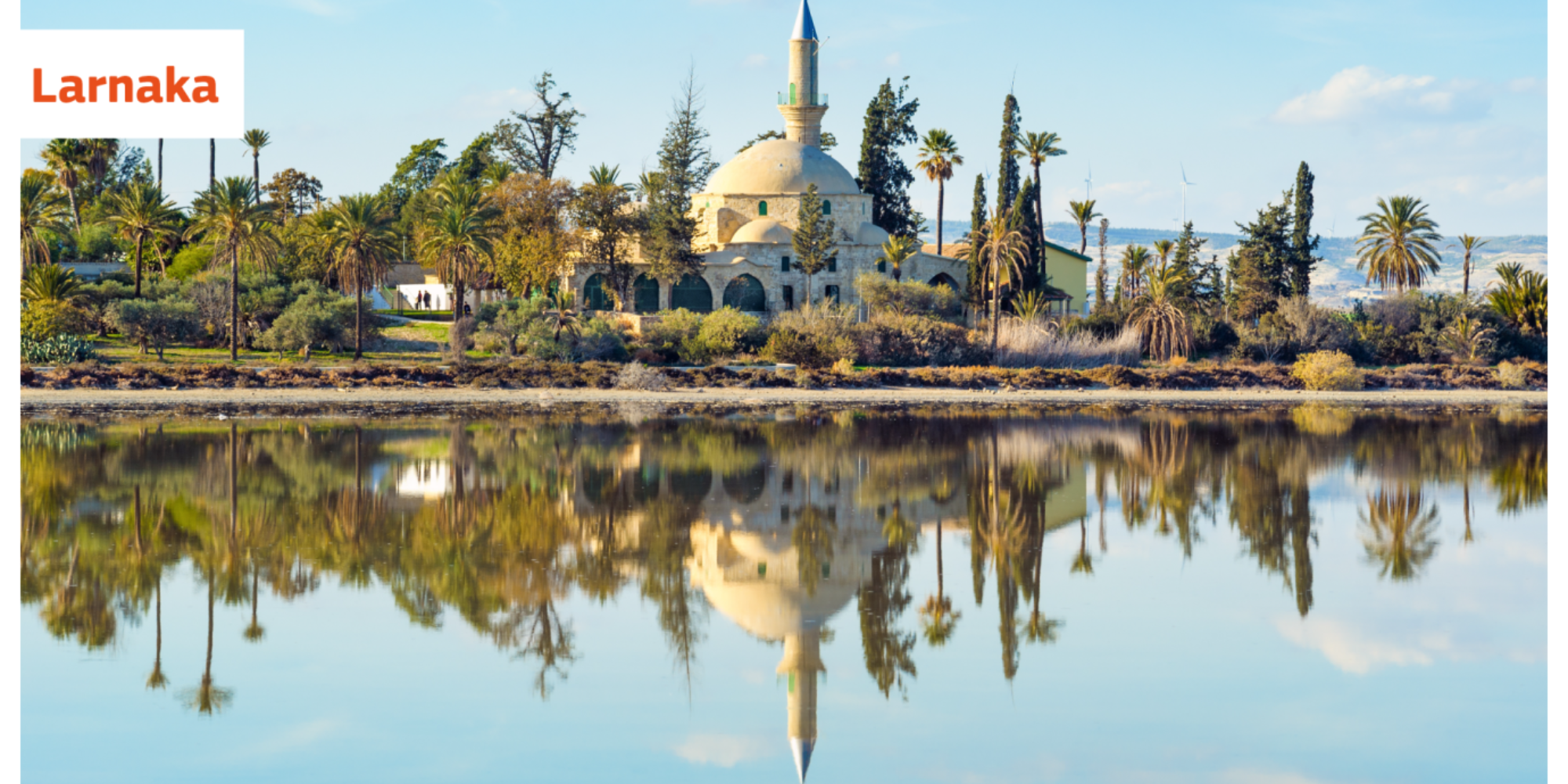
On 11 December, the panel of experts recommended that Larnaka becomes the 2030 European Capital of Culture in Cyprus. It is the country’s second city to hold the title after Pafos in 2017.
To counter ongoing global crises, Larnaka aims to bring back anthropia (our deep and common human values) at the centre of the stage. Through the exploration of a “common ground in all its forms, whether physical, mental or emotional, the city wishes to foster togetherness, vulnerability and care.
Selection process
The selection process for the European Capitals of Culture title consists of two rounds: a shortlist of candidate cities is compiled during the pre-selection, followed by a final selection, about nine months later. The chosen city is then formally designated by the country concerned.
A panel of 12 independent experts assess the applications. National authorities appoint two members and EU institutions and bodies (European Parliament, Council, Commission and Committee of the Regions) appoint the remaining ten.
Candidate cities must present a cultural programme with a strong European dimension, involve local communities, attract visitors from across Europe, and show both lasting impact and the capacity to deliver.
For the 2030 title in Cyprus, five cities applied by 16 December 2024:
- Agia Napa
- Kourion
- Larnaka
- Lemesos
- Nicosia
of which Larnaka and Lemesos were shortlisted at the pre-selection meeting in Nicosia on 25-27 February 2025.
The European Commission may award each European Capital of Culture with the €1.5 million Melina Mercouri Prize, funded under the Creative Europe programme, in recognition of the quality of their preparatory process.
European Capitals of Culture in 2030
The announcement completes the selection for 2030. Larnaka joins Leuven (Belgium) and Nikšić (Montenegro) as European Capitals of Culture that year.
The transformative effect of the European Capitals of Culture
Born in 1985 from an idea of the then Greek Minister of Culture, Melina Mercouri, the European Capitals of Culture have grown into one of the most ambitious cultural projects in Europe and one of the best known – and most appreciated – initiatives of the EU.
The European Capitals of Culture action offers cities a chance to celebrate cultural diversity, engage communities, create European connections, and promote local and regional development.
A recent EU evaluation confirmed its remarkable results, from boosting tourism and cultural activity to fostering social inclusion, international cooperation and a stronger sense of community across Europe.