
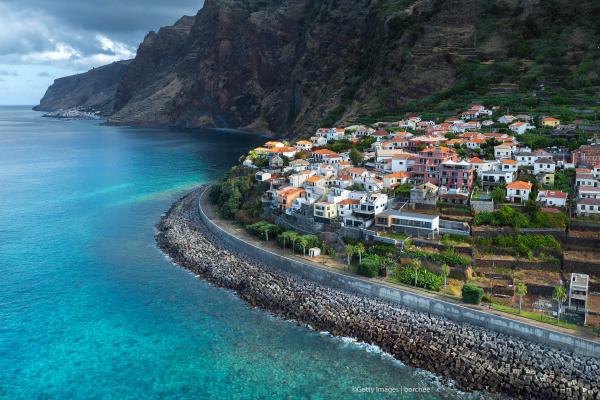
The European Commission adopted two dedicated strategies, one for EU islands and one for EU coastal communities, setting out for the first time a coordinated European approach to support both types of territories and unlock their long-term potential.
The two initiatives introduce a targeted approach, dedicated to the specific needs and unique challenges of:
- 17 million people living on more than 4,000 islands across 16 EU Member States;
- 95 million people living along the 70,000 km of EU coastlines and in coastal areas across 22 EU Member States.
To that end, the Commission proposes a coherent, holistic approach addressing economy, connectivity, energy, environment, demography and security in an integrated way, aiming to transform the challenges faced by these territories into opportunities and lasting strengths. This includes ensuring that their specific needs are fully reflected in future proposals and aligned with broader EU priorities.
A future-proof strategy for Europe’s islands
The strategy aims to integrate the needs of islands and reflect the challenges they face into broader EU policies adapted to their specific needs. It is structured around four key pillars:
- Economic development, connectivity, competitiveness and innovation: boosting entrepreneurship, diversified local economies, sustainable tourism, and digitalisation, while tackling the connectivity gaps that constrain island economic activity and life.
- Energy security, environmental protection and climate resilience: accelerating decarbonisation, renewable energy, climate adaptation, and biodiversity protection.
- Communities and demography: strengthening public services, healthcare, housing, education and social inclusion to reverse depopulation and retain young people.
- Security and crisis preparedness: reinforcing resilience against natural disasters linked to climate crisis, maritime risks and other emerging threats.
The strategy promotes the establishment of a regular dialogue between EU institutions and stakeholders representing the interests of islands, as well as various technical support measures, including capacity building and exchange of good practices. Member States are invited to include targeted measures for the development of islands in their future National and Regional Partnership Plans, including those linked to insularity in areas such as connectivity, services and infrastructure. Member States are also invited to come up with territorial investment tools to promote integrated strategies for islands and facilitate better cooperation.
A strategy for prosperous coastal communities
The strategy on coastal communities focuses on three priorities:
- To drive prosperity, it promotes a dynamic, competitive, and diversified blue economy, fostering innovation, new business models—such as pescatourism, the bioeconomy, and offshore renewable energy—and creating high-quality job opportunities.
- To strengthen resilience, it enhances adaptability to climate change and broader environmental, economic, social, and security challenges, notably through the implementation of the recently presented OceanEye initiative.
- To enhance liveability, it promotes vibrant, inclusive, and attractive places where people of all ages can thrive—working, living, and enjoying their surroundings—while safeguarding maritime culture, heritage, and local identity.
The strategy emphasises tailored, locally led solutions, recognising the diverse needs of coastal communities—from remote fishing villages to major port cities.
Key measures include:
- Empowering coastal communities in maritime spatial planning through the upcoming Ocean Act, promoting the sustainable use of the ocean’s natural capital, fostering climate adaptation and unlocking opportunities for sustainable growth.
- Supporting blue bioeconomy clusters and supply chains in coastal areas through local community-led projects, as part of the future EU Blue Bioeconomy Innovation Initiative.
- Developing a certification system for blue carbon credits to create new opportunities for blue economy services and income for coastal communities.
- Advancing climate resilience through increased risk assessments, investment mapping and capacity building support for coastal adaptation, involving the European Investment Bank and the EU Missions on Adaptation to Climate Change and Restore Our Ocean and Waters.
More information:
Communication EU coastal communities
Factsheet on EU islands strategy
Factsheet on EU coastal communities strategy
Source: European Commission | Press Corner
(https://ec.europa.eu/commission/presscorner/detail/en/ip_26_1318)