Europe brings together industry and research in a Virtual Worlds Partnership to accelerate innovation, develop skills and advance immersive applications across sectors.
The European Commission launched the European Partnership for Virtual Worlds, bringing together industry, academia, research organisations and end-users to support research and innovation in this area.
Virtual worlds are persistent, immersive environments based on 3D and extended reality (XR) technologies, that allow people to interact, work, and create in new ways. Built on 3D, XR and advanced simulation technologies, they are expected to transform numerous sectors in Europe. For instance, they can provide faster and more accurate diagnosis in healthcare, deliver cost-effective training and education, or allow engineers and manufacturers to test prototypes of production lines and complex architectural structures before building them. Virtual worlds also open new opportunities in cultural engagement, from immersive museum experiences to interactive heritage preservation.
This transformative potential is reflected in the estimated growth in global market share, which is forecast to rise from €27 billion in 2022 to over €800 billion by 2030. The new European Partnership for Virtual Worlds will ensure that Europe plays a leading role in this technological and industrial shift.
The Virtual Worlds Partnership
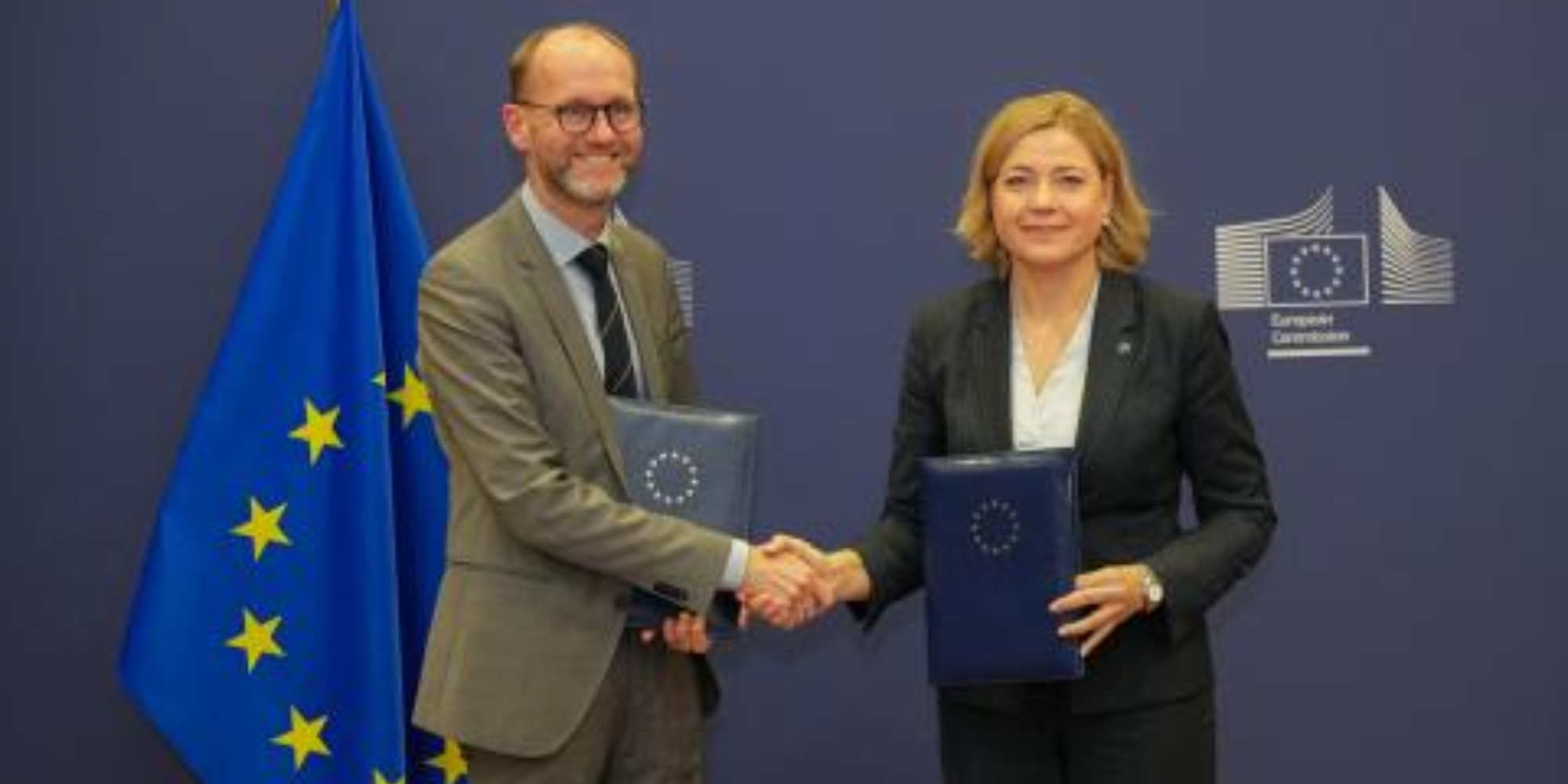
The European Partnership on Virtual Worlds, signed by Henna Virkkunen, Executive Vice-President for Tech Sovereignty, Security and Democracy, and the Virtual Worlds Association, aims to ensure the EU fully benefits from the potential of virtual worlds. It will promote excellence in research, innovation, standardisation and skills development, while encouraging the deployment and adoption of human-centric virtual worlds.
Under the partnership, the European Commission plans to allocate up to €200 million within the current Multiannual Financial Framework to research and innovation activities and Virtual Worlds Association members will match this investment with at least €200 million between 2025 and 2030, ensuring strong public-private collaboration to scale virtual worlds across sectors.
The Partnership signed yesterday, 10 December, brings together the European Commission and the Virtual Worlds Association, led by Siemens and composed of 18 founding members, representing a strong cross-section of the European ecosystem:
- Siemens (DE)
- SAP (DE)
- Universidad Politécnica de Valencia (ES)
- VRT media Flanders (BE)
- VTT (FI)
- CNRS (FR)
- CNR (IT)
- PopulAR (BE)
- Brainstorm (ES)
- CERTH (GR)
- Voxel Sensors (BE)
- KU Leuven (BE)
- Fraunhofer (DE)
- DFKI (DE)
- imec (BE)
- Poznań University of Economics and Business (PL)
- CSGroup (FR)
- Immersion (FR)
By combining their expertise and resources, the founding members, soon to be joined by all members of the association, will help build a competitive and resilient European ecosystem for virtual worlds, anchored in Europe’s strengths in research and innovation.
Tangible benefits for citizens and businesses
The Virtual Worlds Partnership will deliver concrete results for both citizens and businesses. Important areas of work include:
- Industry and sustainability: digital twins and virtual prototyping to cut costs and reduce environmental impact in manufacturing and engineering
- Healthcare and wellbeing: VR simulations for medical training, surgical planning, and rehabilitation therapies
- Education and skills: interoperable 3D learning environments for schools and universities, giving students and teachers access to high-quality resources in safe, controlled settings
- Culture and creativity: immersive museum visits, theatre performances, and heritage experiences accessible to all Europeans
Through its initiatives, the Partnership will accelerate innovation, support skills development, and advance standardisation efforts while encouraging cooperation between private and public sector partners at international level.
The first Strategic Research and Innovation Agenda sets the priorities, across domains of applications, technologies and related challenges such as ethical, legal and societal issues, sustainability or governance of the future Web4.0.